Ancient Writing and Go-betweens
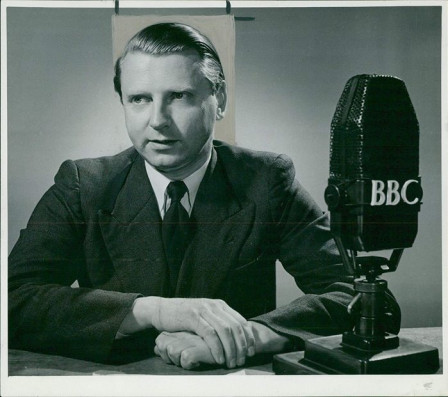
Transducers are information processing systems that enable information embodied in one domain to be transmitted to another. A microphone transfers information from sound into electrical signals. A domain is the means of embodying information, and since information is a physical property, it necessarily must be embodied. Previously, I defined this sort of domain as a triplet: the medium, basis and scale for information embodiment (Farnsworth, 2023)*. Medium is easy to understand since it is the substrate, the physical stuff in which a pattern is formed and that pattern is the information. Writing on a printed page is a pattern of, usually ink, marks, so the medium is ink on paper (could be parchment or papyrus). The first medium used by humans for recording information was probably stone, though the clay tablets into which marks were made with a stylus (cuneiform writing) is worth mentioning. It took a long time for modern archeologist to work out what the information meant. But even before it was ‘deciphered’ it was still information in the physical sense. The difference between a puzzling set of patterns and being able to read it is only the difference between physical information and meaningful information. I define the latter as information that could have a consequence for the system receiving it, e.g. a scholar (like Leonard Cottrell pictured above), or the ancient Mesopotamian recipient it was inteded for.
* See Farnsworth, K.D. (2017) for first mention; Farnsworth (2018, 2022, 2023 and 2025) for elaboration.
The symbols in cuneiform are small groups of standard marks each made by pressing a particularly shaped stylus into soft pre-baked clay. Each little group forms a stylised version of (an earlier development stage) pictographic symbol, termed a glyph. These clusters of marks are each a symbol with a specific meaning and every symbol is composed from a set of marks in particular orientation and relation to one another. The basis of this information is the set of possible symbols (a modern example would be the set of Chinese characters, or of letters in the Roman alphabet). A biological example is the codon: that group of three nucleotide bases in DNA or RNA that specifies an amino acid. Computers deal exclusively in binary, of course, but they are designed to process information represented in binary ‘words’ (bytes) that are each a standard number of bits long (often 32 or 64 these days), so the typical basis for computer information is a 64-bit binary string.
Basis can be a bit hard to find in some kinds of information as the case of music illustrates. Music written in manuscript staves uses the set of music notation symbols as its basis and once played, it could be recorded in digital format (where bytes rule) or some analogue medium. It is in this last case that basis is hard to discern, as it is for the embodiment of music as sound - a travelling pattern in the pressure (usually of air). Given that it’s music, not any old sound, we could say there are certain rules being followed: at least in Western music, there is a definite scale and notes and chords that are specific groups of notes played simultaneously. From that we may say the notes of a particular scale and a time interval (the beat) are basis for music, even in analogue media such as air pressure or undulations in the groove of a vinyl record. This is not too bad as a foundation to work with. It gets harder when considering music from some other cultures and even more difficult with e.g. animal sounds. But they too have rules and the rules will be the guide to the basis.
Alphabets and Tuning Dials
Overall, what we are looking for is the set of symbols from which the information is constructed. A bird’s song may be one symbol in its entirety, the bird may have a repertoire of three kinds of call of which the song is but one, then the basis is that set of three. There are thousands of permitted Chinese writing symbols and among natural information systems, the number of basis elements can be far larger. For example the set of possible proteins and their conformations (different shapes derived from different ways the polypeptide chain can twist up) is astronomical in number. But for cell signalling, using proteins and their conformations, a very limited set of these are valid, so the basis is usually rather small.
This brings us to scale - the last of the triplet describing domain and for the proteins it is obviously the scale of molecules since the information is embodied in whole molecules (differentiated by their shape). Radio communications makes good use of scale by tuning transmitters and receivers to a (matching) particular frequency of electromagnetic wave - the carrier wave of the channel (BBC or your choice). ‘Tuning in’ is effectively setting the scale of information embodiment to which our radio receiver is sensitive. That way, though the medium and basis can remain the same, many channels of information can be independently supported. So there you have medium, basis and scale - the three aspects of physical embodiment of information.
Reaching across domains
Now, the question is, how does information get from one domain into another? To go from sound in the air to electric signals in a wire and then to a digital recording takes at least two transducers. The first is of course a microphone, which has one end effectively in the pressure wave medium of sound (usually a thin plate or diaphragm that vibrates in sympathy with the sound wave) and the other end in an electrical circuit, where the vibrating part creates variations in resistance, capacitance, or magnetic field by virtue of corresponding physical phenomena. These variations cause matching fluctuations in the current or voltage of the circuit and those can then be transformed by an analogue-to-digital converter. It is a kind of transducer rather like a set of sieves, changing analogue fluctuations in voltage at one end, to presence / absence signals at the other, depending on whether a particular value sieve caught something or not. The ribosome is a complicated (and we could say ingenious) molecular scale machine that reads the sequence off RNA as instructions to compose a polypeptide chain for protein - rather like an automatic (Jacquard) loom reading a paper tape of instructions to produce a particular weave pattern in the material coming out the other end. In the information sense, the ribosome and the loom are both transducers with their head in one domain and their tail in the other, passing the same information from one domain to the other.
So a diplomat is a character from one culture who enables information to pass either way to and from a foreign culture into which they are embedded. It’s all very polite of course, not involving tail ends at all, but in terms of information and domains, the principle is rather the same (especially if the two cultures differ in language). Now let us notice something important about transducers. The diplomat follows a lot of rules of protocol and is very knowledgable. The ribosome has a very complicated (information rich) structure. Even a microphone and an AtoD converter is a highly engineered and rather information rich structure and so is the molecular machine that is a serotonin receptor / second messenger complex, embedded in a cell’s membrane (with the extracellular end reading hormones and the intracellular end ‘speaking the internal language of the cell’).
The lesson is twofold. First, transducers are themselves rich in embodied information: it takes a fair amount of information to enable other information to travel between domains. Secondly, it takes a lot more if the transducer is having to decode and encode the information to match domains (as the diplomat translating, or the archeologist reading cuneiform) than if it is merely following a fixed procedure (as in the microphone and AtoD converter). The ribosome is only a part of the genetic translation system so in itself does not constitute a code translator. The whole system (I will call it the ribosome complex) consists of ribosome, a set of tRNAs (the real transducers in this) and their aaRS molecules that help them translate. In a way, this particular transduction apparatus is separated into chemical machinery for transforming across media (the ribosome) and a set of molecules that embody the code information as amino acid - codon pairs, for transforming basis (the scale does not change). Code transducers have to embody the code they use.
Technically, we can describe transducers as performing a mathematical mapping from one mathematical domain to the other (this ignores the physical medium). When the mapping is fixed (i.e. the output is physically connected to the input), as in a microphone, the transducer tends to be less complicated. But when it is not fixed, the mapping involves a code and the transducer has to embody that code in order to use it. This makes code-transducers such as ribosome complexes and diplomats much more complicated.
So, what of the mermaid, you may wonder. Well she has her tail in the marine domain and her upper body in the human domain, but heaven knows what is going on between. If mermaids were real, they would count as extremely radical chimeras (single organisms composed from genetically distinct cell lines), not to be confused with the marine creatures known as chimaeras. Fish and human are so histologically and physiologically incompatible that they defy biology and internal communication among the parts would be … problematic to say the least. But mermaids are said to sing - it is a wistful and compelling sound for sailors and therefore a kind of communication between the deep mysterious sea and those who do not really belong there. Something of a transducer then, though perhaps more between myth and reality than sea and seafarer.

References (just two to keep you going - the rest are easy to find).
Farnsworth KD (2017) Can a robot have free will? Entropy 19:237. https://doi.org/10.3390/e19050237
Farnsworth, K.D., (2025). How physical information underlies causation and the emergence of systems at all biological levels. Acta Biotheor. 73, 6. http://dx.doi.org/10.1007/s10441-025-09495-3.
Image Credits:
Mermaid AI generated. Designed by Magnific (www.magnific.com)
Top picture: Correspondent and author of many archeology and ancient history books - Leonard Cottrell with the iconic BBC Marconi mic. Photo of unknown source (perhaps the BBC), but I knew Leonard - my mother was his typist!
For more information on this microphone (and many others) see https://www.coutant.org/bbc/index.html



 Contemplating what constitutes objective truth and what happens when we reject it -- nothing good!